FIELD NOTE
The announcement, precisely
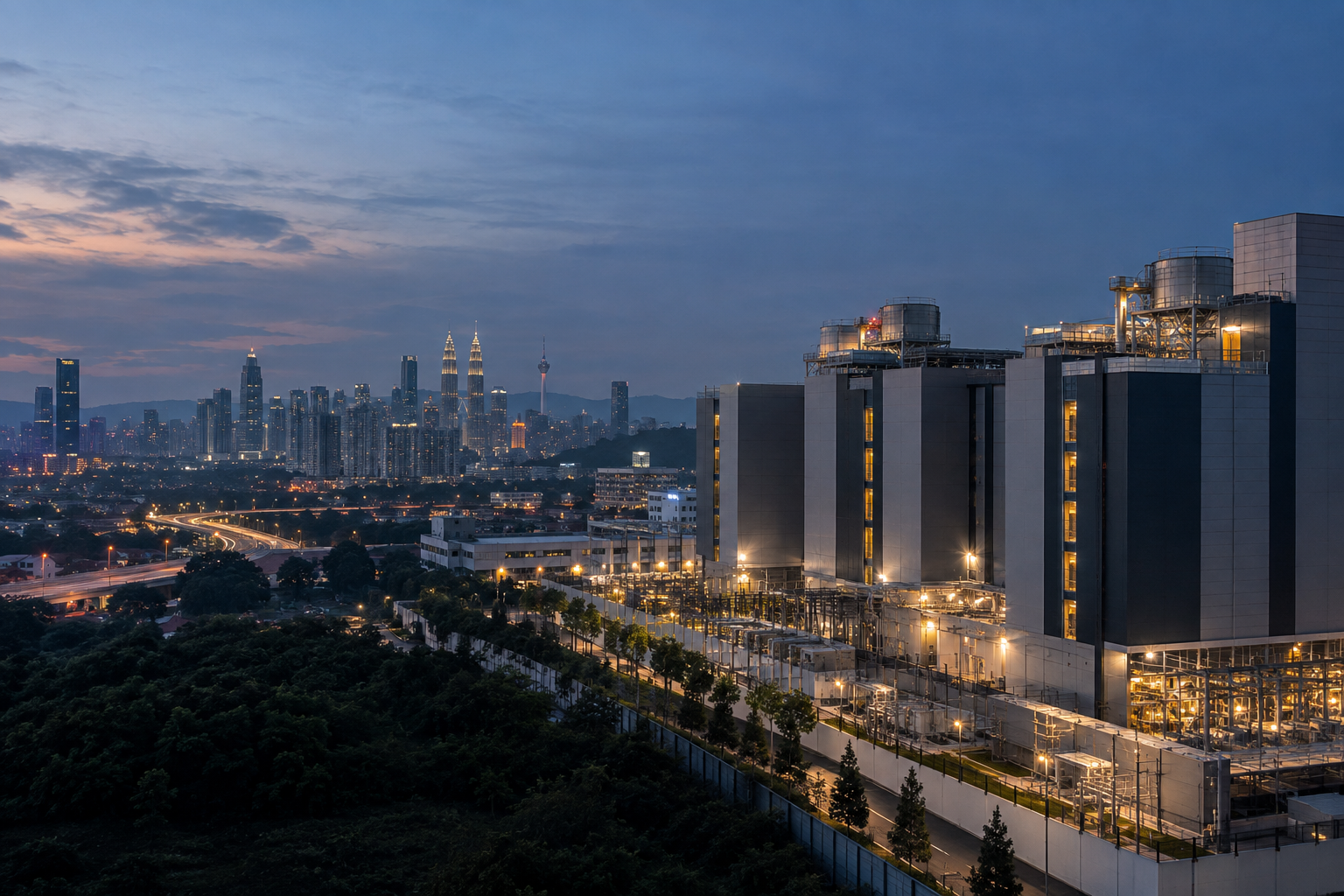
On 8 September 2026, Firmus said OpenAI would contract dedicated AI compute capacity from two of its AI Factory sites in Malaysia and become an anchor customer. Firmus also said its total contracted capacity had passed 900 MW, across a portfolio of seven AI factories in Australia, Singapore, Indonesia and Malaysia.
OpenAI’s quoted rationale is equally specific: the new Malaysian data centres are intended to help serve growing demand for OpenAI products in the region and globally. The announcement describes contracted capacity and a strategic partnership. It does not say that OpenAI owns the facilities, that every OpenAI product will run there, or that Malaysian customers automatically receive local data residency.
- Two Firmus AI Factory sites in Malaysia
- OpenAI as a Firmus anchor customer
- More than 900 MW contracted across Firmus customers
- Five of seven sites still under development
FIELD NOTE
Why the headline matters—and where it overreaches
The Instagram headline calling Malaysia ‘home to OpenAI’s physical AI infrastructure in Southeast Asia’ captures the direction of travel, but it compresses several distinct ideas into one phrase. The sourced fact is that OpenAI has contracted capacity from Malaysian facilities operated within Firmus’s platform. The broader claim that Malaysia is the home, headquarters, or sole regional base of OpenAI’s physical infrastructure is not established by the release.
That distinction matters for procurement, data governance and public trust. An AI data centre can be physically in Malaysia while the service, control plane, support model, retention policy, subprocessors and data-transfer terms remain different questions. A careful article should make the opportunity legible without turning a supplier announcement into a guarantee.
FIELD NOTE
Malaysia already has the policy and facility signals
This deal arrives alongside a wider Malaysian infrastructure push. NEXTDC’s May 2026 launch of KL1 in the Klang Valley described a 65MW, AI-ready facility built to Tier IV design requirements and positioned Malaysia as a regional platform for AI, cloud and digital services. It is a separate company and facility from Firmus, but it shows why the country is attracting serious AI-infrastructure investment.
MDEC’s February 2026 announcement on the ASEAN Regional Framework on Cross-Border Cloud Computing adds a governance layer: trusted data corridors, safeguards for data at rest and in transit, clearer regulatory access rules, and support for regulated sectors. The Ministry of Digital’s July 2026 AI Malaysia announcement also names data and computing infrastructure, responsible governance, and sustainable investment as foundations of the National AI Action Plan 2026–2030.
FIELD NOTE
What an AI factory changes for operators
An AI factory is more than a room full of GPUs. It combines power, cooling, accelerated computing, networking, software and workload operations into an integrated capacity platform. Firmus says its Malaysian sites will use NVIDIA’s Vera Rubin platform and its HyperCube liquid-cooling and electrification system; those are vendor-described plans, not an independent performance guarantee.
For a Malaysian business, additional regional capacity can improve the options available for latency-sensitive workloads, burst capacity, model serving and regional resilience. It does not remove the need to map data, test failover, negotiate service boundaries, measure token and infrastructure cost, or keep an accountable person in the operating loop.
- Ask where inference and logs are processed
- Separate capacity location from data residency
- Check support, exit and portability terms
- Test latency, throughput and failure recovery
- Keep sensitive or irreversible actions behind approval
FIELD NOTE
What Malaysian businesses should ask next
Teams comparing AI companies in Malaysia, AI companies in Kuala Lumpur, or a custom AI infrastructure partner should ask for an evidence pack rather than a slogan. The useful pack connects the proposed model and facility to the workflow: data classes, jurisdictions, identity, permissions, network path, retention, observability, incident response and a tested rollback.
The first project should be bounded. Pick one repeated operating path, define the outcome and exception owner, run representative workloads, and record what the system did when a tool failed or a human disagreed. Infrastructure scale becomes valuable when it shortens a real handoff or makes a service more dependable—not when the business merely claims to have adopted AI.
- Data and jurisdiction map
- Named service and security owners
- Performance and cost baseline
- Human approval and escalation path
- Export, portability and retirement plan
FIELD NOTE
The sober read
Malaysia is becoming a consequential place to build and run AI infrastructure in Southeast Asia. Firmus’s OpenAI announcement is a meaningful new signal because it connects a frontier-model provider to dedicated capacity in two Malaysian sites. The durable advantage will come from the operating layer around that capacity: trusted data movement, resilient systems, clear ownership, and businesses that can turn compute into useful work.
The next question is not whether the headline sounds impressive. It is whether an operator can show the exact workload, evidence, controls and outcomes that the infrastructure makes possible.
DIRECT ANSWERS
Questions operators ask
Does OpenAI have a data centre in Malaysia?+
Firmus says OpenAI will contract dedicated AI compute capacity from two Firmus AI Factory sites in Malaysia. The release does not say OpenAI owns those facilities, so ‘OpenAI data centre in Malaysia’ is shorthand that needs qualification.
What is an AI factory?+
In this announcement, it is an integrated infrastructure platform combining power, cooling, accelerated computing, networking, software and workload operations for AI compute. The exact services and availability depend on the operator and contract.
Why is Malaysia attracting AI infrastructure investment?+
Company announcements point to a growing AI-ready facility base, Klang Valley connectivity, regional cloud demand and government work on trusted cross-border data flows and AI Nation 2030. Those signals indicate direction, not a guarantee of price, capacity or outcomes for every business.
Will Malaysian customers automatically get data residency?+
No. Facility location and data residency are separate. Confirm processing regions, logs, backups, subprocessors, retention, contractual terms and applicable Malaysian data-protection requirements for the specific service.
How should a Malaysian business prepare for more local AI compute?+
Start with one bounded workflow, map its data and system boundaries, set least-privilege access, define a human approval point, measure latency and cost, and test failure recovery before expanding.
SOURCE LEDGER
Primary sources
Official material is linked directly. Claims are paraphrased and checked against the source status available on 2026-09-08.FRICTION EDITORIAL CONTROL
Original analysis. Visible limitations. No invented certainty.Prepared by Friction Research and reviewed against primary sources. This material is general information, not legal, tax, financial, or regulatory advice. Requirements can change; verify material decisions with the relevant authority or a qualified adviser.Read our editorial policyREADER EXCHANGE
Add to the conversation.
Name and email are required. Suspicious or abusive comments are held before publication.


Loading conversation.